
Chivalry as Meaning for the Dames and Knights of The Order of St. George
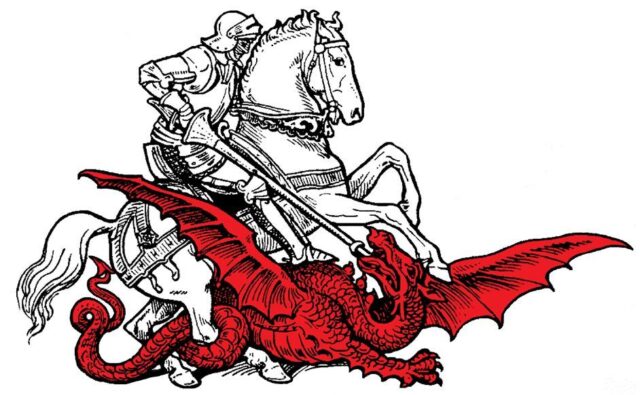
The word ‘chivalry’ comes from the French ‘Chevalier’ which meant ‘horseman’ and of the women of Gaul as “Chevalress”. This was a term used in Old French from 1330 – 1500 AD. In a report from Roman Julius Caesar in the late 1st century, he was surprised by the women of Gaul on horseback fighting the Roman invaders. The rider symbolizes our transcendent “Quest for Self”.
The history of the ideal of chivalry finds its origins in the years after the fall of the Roman Empire. In the vacuum of the Romans leaving the land in the 4th – 5th Century, it set the stage for the age of the Anglo Saxon and Merovingians and the descendant compelling and visionary legend of King Arthur and the Knights of the Round Table. The Dark Ages was a time where there was little left in the world in the way of charity, loyalty, justice, or truth. The rise of chivalry was a return to the ideals of justice and honour, and an effort to restore balance, justice, and truth in an unjust and brutal world.
The true Knight is not perfect but is always on a path towards perfection. Hence, the physical and mental trials all Knights go through. In the view of ancient and current belief systems and representative cultures going back over 7,000 years, it is believed that humanity is perfectible. It is our destiny as human beings to constantly aspire to achieve the divine within ourselves. This was frequently manifested in the efforts of Middle Age alchemy, or the transmutation of the base person, as lead (earthly, heavy, and opaque) into the person of gold – shining, incorruptible, pure, and selflessly giving.
The hallmark of chivalry is nobility – not of blood, but of character. And what is nobility of character but the transcendence of one’s lower traits to achieve the higher? It is the ability to resist base and self-serving impulses and strive, instead, for the benefit of the greater good. In this sense, this is more than a reactive product of the European Middle Ages, but a universal ethical vision for all Humankind.
St. George symbology represents the Dragon and the Knight – locked in mortal combat, the dragon wielding tongue and claws while the Knight defends with the lance and shield. This illustrates the fact that chivalry is not only about external battles, but also, most importantly, about the inner battle between the higher and lower selves of all human beings.
A Dame or a Knight faces and defeats their own fears in order to better know and more fully become their true selves. This conquest of self can free the soul to better help others. By understanding and overcoming personal challenges one is better able to understand the challenges, fears, and barriers with which others struggle.
The Knight who practices chivalric values with respect to the body but does not practice those of the soul is not a friend of the Order of Chivalry and cannot offer honor and justice to those around them.
There is a rich and related symbolism in the colors of the Shield of St. George associated with its origins in alchemy. White represents simplicity, innocence, to indicate a beginning and perfection. In heraldry, white is used to show purity. Red is the color of fire and blood and is associated with energy, war, danger, strength, power, and determination in balance with passion, desire, and love. In heraldry, red is used to indicate courage.
To achieve that goal, the Dame or Knight must work towards personal, spiritual transformation. The long labor of purification, symbolized by the transformative trials and adventures of the Knight, included righting wrongs and protecting the innocent. The Knight in shining armour today is not some outdated, romantic myth but, a timeless symbol of selfless efforts to change the world. To make it a better place for all.
Yours in St. George,
Chevalier Steven Mohns KGCStG
Knight Grand Cross to the Order of St George
Prior
Order of St George
Priory of the United States of America
 ostgusap.com